What the Workplaces People Love Have in Common
Some offices you walk into and immediately feel something. The workplace experience just works – the space makes sense, people look comfortable and there’s an energy that’s hard to articulate but impossible to miss. Others you walk into and feel the opposite – functional maybe, but flat. That kind of place people leave as soon as they reasonably can.
The difference between the two is rarely one big thing. It’s the accumulation of dozens of smaller decisions – about environment, services, design, and the day-to-day running of the space – that either add up to something people want to be part of, or don’t.
Understanding what those decisions are, and why they matter, is where it starts.
The stakes are higher than they used to be
The office used to be the default. People came in because that was where work happened. That’s no longer true for most businesses, and the shift has changed what employees expect from the spaces they’re asked to work in.
Global employee engagement sits at just 23%, the lowest it’s been in years, and disengaged employees are costing businesses trillions in lost productivity. At the same time, nearly half of employees say their organisation fails to deliver the experience it promised. That gap between expectation and reality doesn’t just affect how people feel day to day – it shapes how long they stay, how much they contribute and how they talk about the organisation to people outside it.
The businesses closing that gap aren’t necessarily spending more. They’re thinking more carefully – about what the workplace is actually for and what it needs to do for the people in it.
What the environment is really doing
The physical environment does more work than most people consciously register. Natural light, air quality, temperature, acoustics – these factors have a direct and measurable effect on how people feel and function throughout the day. An office thats gets these right creates conditions where focused work, collaboration and genuine comfort can coexist, one that doesn’t create a low-level friction that people adapt to without complaining, but that quietly shapes everything.
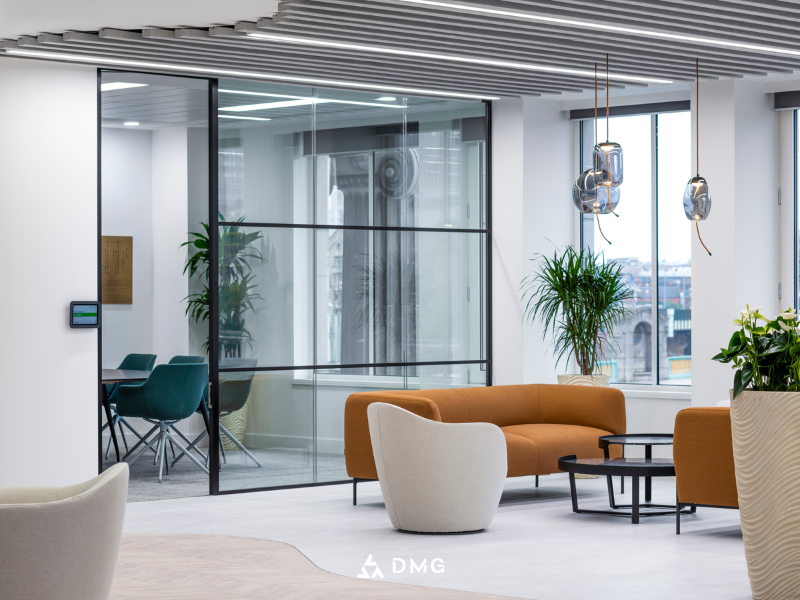
Beyond the basics, the design and feel of a space communicates something before a single conversation happens. A workplace that feels considered tells people their employer has thought about them. One that feels generic or neglected tells a different story – regardless of whether that was ever the intention.
The services nobody notices until they’re missing
The less visible side of workplace experience is the services that keep the day running. The quality of the coffee, whether the hydration setup is actually worth using. Whether supplies are there when people need them. Whether the space is consistently maintained to a standard that feels professional.
None of these are glamorous, but they’re things people feel most acutely when they go wrong – and when they’re managed well, they become invisible in the best possible way. A workplace where everything just works, day after day, creates a sense of reliability that feeds directly into how people feel about being there.
Why coherence matters more than any individual element
Most businesses aren’t lacking investment in their workplace. What they’re often lacking is coherence. Different suppliers managing different parts of the environment, none of them with sight of the full picture, and gaps appearing wherever responsibility isn’t clearly owned.
The result is a workplace where some things work well and others don’t – and where the overall experience ends up being defined by its weakest parts rather than its strongest. A beautifully designed office with an unreliable supplies setup and a neglected hydration station doesn’t feel like a considered workplace…it feels like an unfinished one.
The workplaces people genuinely love tend to have one thing in common beyond everything else: someone has taken responsibility for the whole people, not just parts of it.
Where DMG comes in
This is the problem DMG Office was built to solve. We work with some of the UK’s most recognised businesses as their single workplace partner, managing everything from daily office supplies and print to hydration, furniture, design and beyond.
Not because offering more services is a good business model, but because the workplace experience is only as good as its weakest part. When one partner understands the full picture, nothing gets overlooked and nothing falls between the cracks.
If you want to talk about what that could look like for your workplace, we’d always love to have that conversation.
Talk to the DMG Office team
